
The Healing Touch
Tactile Art & Sensory Soothing in Neurodivergent Lives
During the second semester of my part-time Visual Arts Diploma (at South Bank TAFE), we were fortunate to be guided by Marissa Culpo in a subject called Studio.
This article reflects both the parameters of the brief we were given and the resulting evolution of my project proposal. It captures the conceptual foundation, decisions, and outcomes that shaped the work into its current form.
A more detailed article explaining the process behind TOUCH: THE MAKING will be published at a later date.
Make sure you sign up for my mailing list if you don’t want to miss out!
TOUCH: THE THINKING
The Brief
From the ideas to evaluating the final body of work, the Studio Project introduces you to professional practices and processes adopted in the development of a creative work for the arts and culture sector. You will undertake the planning, implementation and evaluation of completing a creative project.
Your teacher will specify the project brief for the Studio Project. The project will be a response to an issue with historical and contemporary production, interpretation, promotion or consumption of culture.
Part A – Research and analysis
Part B – Develop ideas
Part C – Work plan and budget
Part D – Documentation of your creative work
Part E – Present your Studio Project Proposal
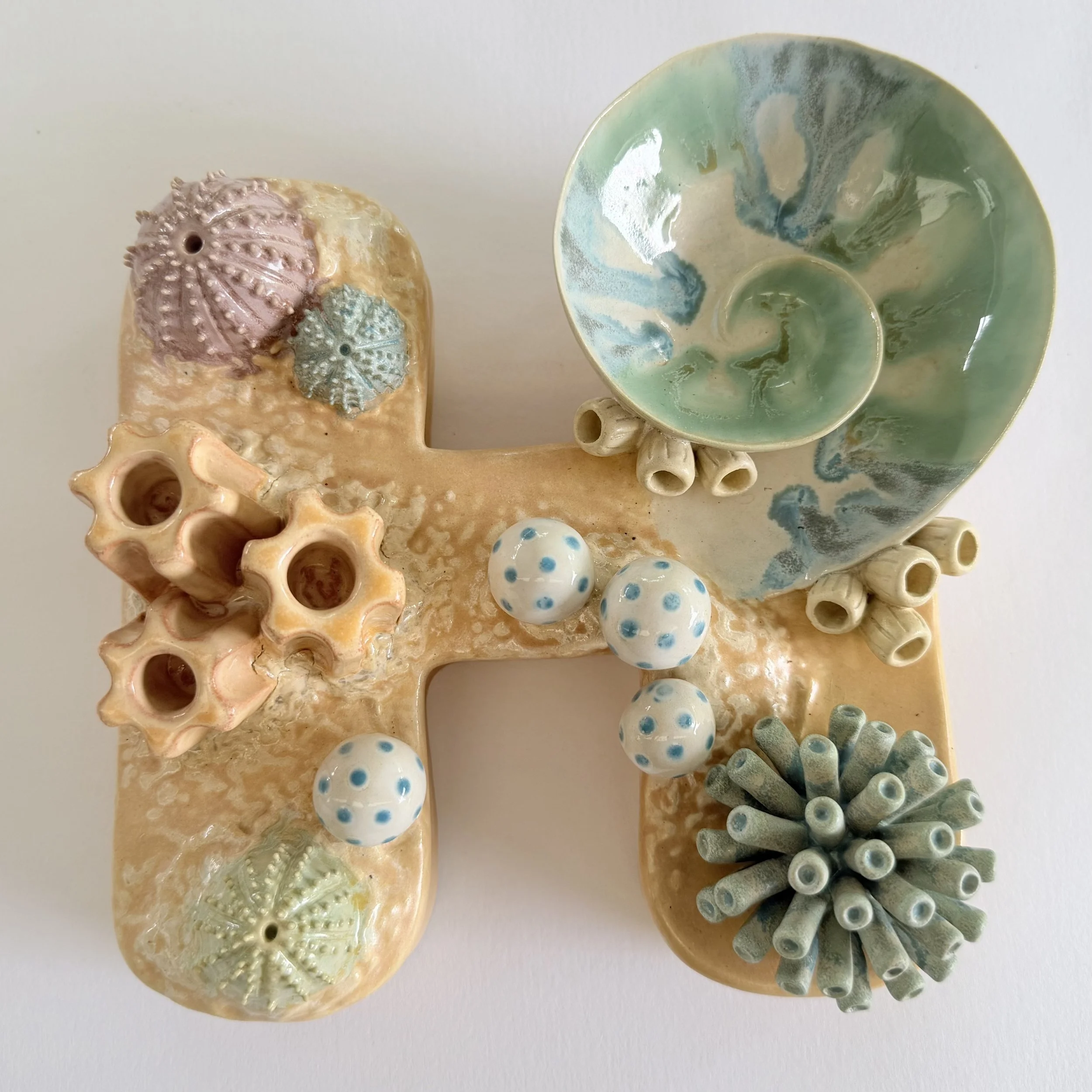
Research Focus
Overall Research Focus
What role do art and sensory experiences play in supporting neurodivergent individuals, and why are they important?
Specific Research Focus
Define the concept of neurodivergence, with particular emphasis on ADHD and Autism.
Explore how neurodivergent individuals experience differences across the eight sensory systems, and how these sensory variations may influence their behaviours.
Investigate the therapeutic and supportive role of art and sensory-based practices in enhancing the quality of life and self-expression for individuals with ADHD and Autism.
Clarified Research Focus
My research investigates neurodivergence, focusing on ADHD and Autism, and how differences in the eight senses influence behaviour.
I will also explore how tactile sensory art can support neurodivergent individuals and how engaging with art benefits everyone – regardless of their neuro-status.
Finding a focus
To determine the topic I wanted to research—and ultimately create an artwork around—I worked through several steps, including multiple mind maps. I began by examining the recurring themes in my existing work, with the sea emerging as the most prominent. I then listed the social issues I’m passionate about and explored possible connections between neurodivergence and the ocean. As I continued refining my focus, I identified haptic art as a potential direction. After discussing these ideas with my teacher Marissa, she suggested a clear research topic: the importance of art in supporting neurodivergent people.
Another mind map…
I then took a deeper dive into the theme of the sea, exploring the words, ideas, and environmental issues connected to it, as well as why I personally feel such a strong attachment to oceanic subject matter. At the same time, I evaluated my own skillset to determine what kind of artwork I might create, though I found myself naturally gravitating toward ceramics, where I feel most confident. Throughout this process, I also became increasingly interested in how art—haptic art in particular—can support neurodivergent people, which further shaped the direction of my research.
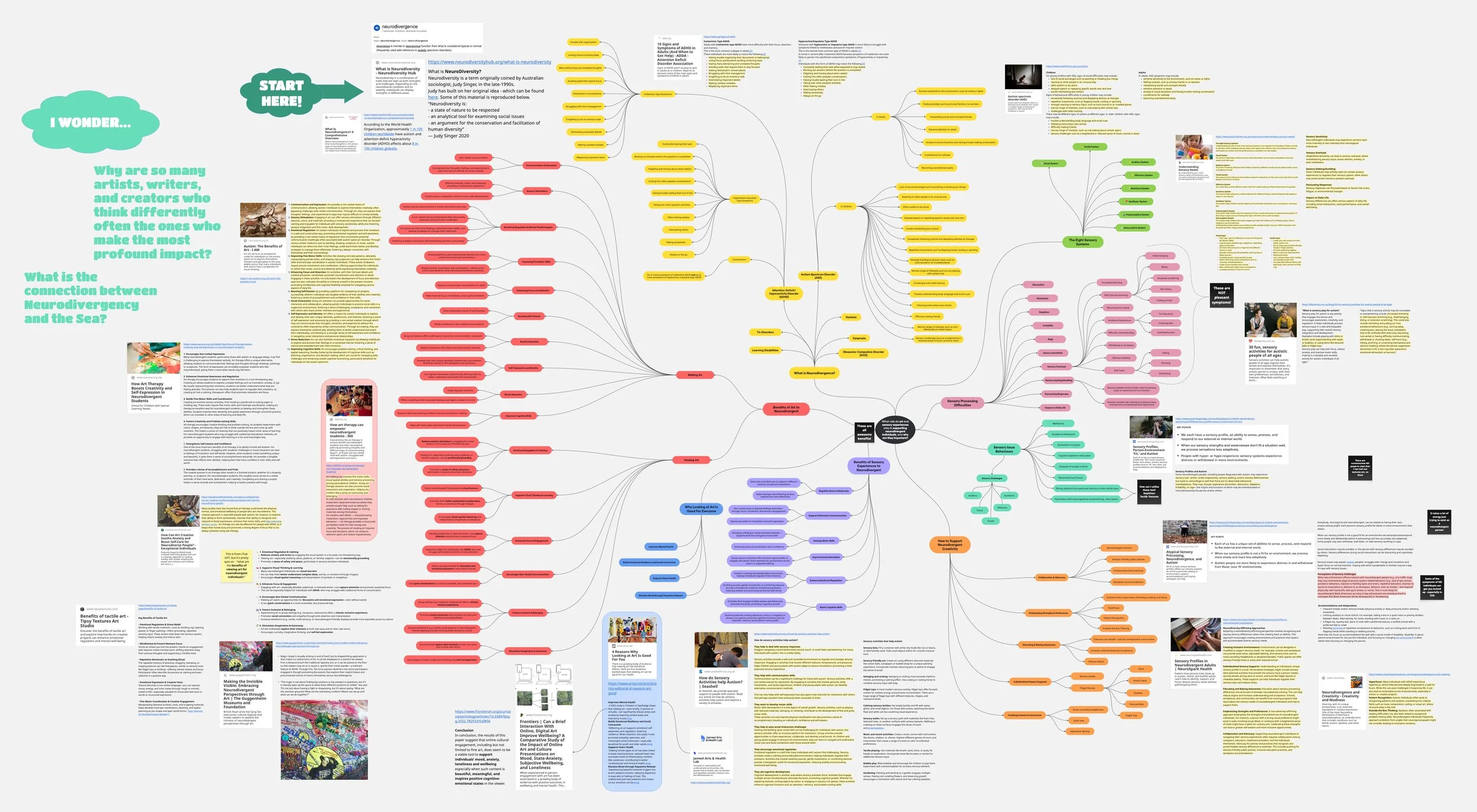
THE RESEARCH
(Down the rabbit hole in another mind map!)
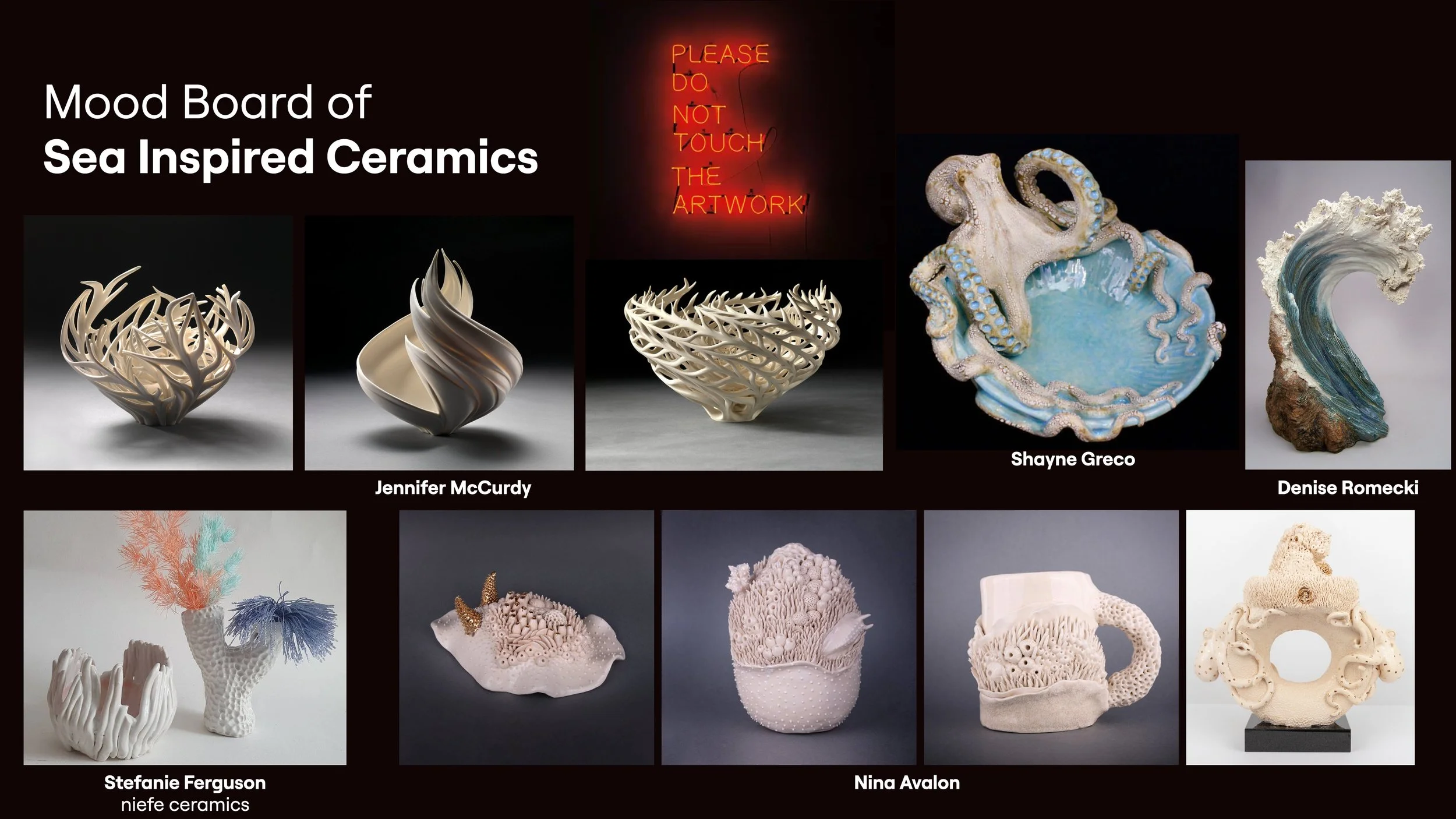
In the mood for a mood board?
During my research, I came across many beautiful sea-inspired ceramic works, but despite their visual appeal, due to their fragility, they all felt very “DO NOT TOUCH” — which was the opposite of what I wanted to create.

I was drawn to textured tiles that suggested durability while inviting physical engagement, a combination that felt far more in tune with the path I wanted the work to take.
Then I discovered…
Courtney Mattison
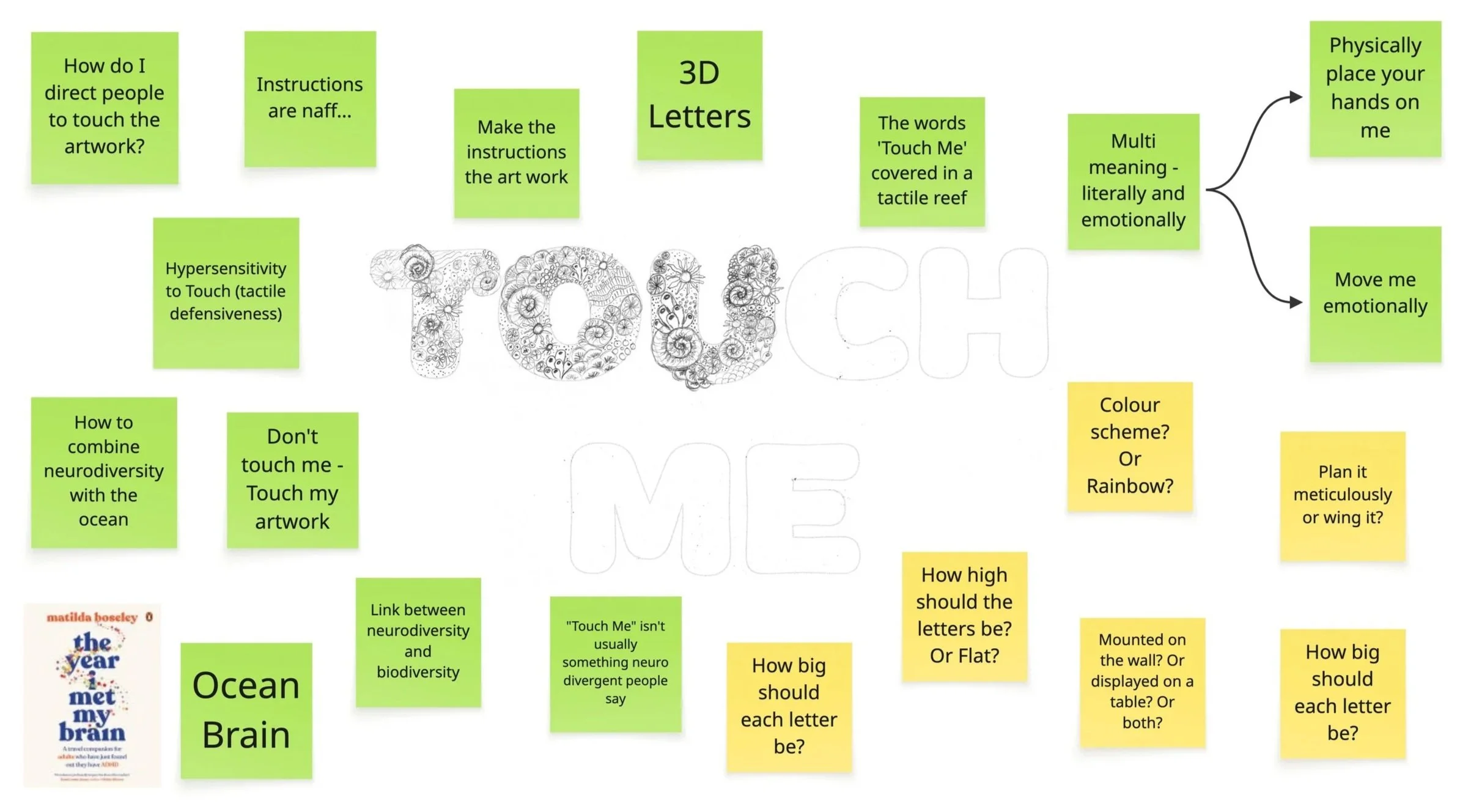
And that’s when I thought…
💡
The Idea
Competitor Analysis
Coming from a UX background, my first instinct was to see if my idea has been done before and gain inspiration. There was lots of artwork that says DON’T TOUCH ME or albumb covers that say TOUCH ME.
AI Image Generation
More of an experiment than anything else… I wanted to see what the competition could come up with, so I generated some images with Adobe Firefly to see if AI could visualize the idea I could see in my head.
It wasn’t even close.
Reef Mood Board
I drew on my diving experience and photos, internet image searches and Pintrest to create a mood board of some of the coral I wanted to feature on my reef letters.
Reef Ceramics Mood Board
I researched ceramic coral reefs that were on a smaller scale to Courtney Mattison’s and would be more suited to decorating the letters. I also started to think about what colour scheme I might use.
The Design
Adobe Illustrator
I started to think about the layout of the coral on the letters…
Version 1
… and then I remembered that this piece had to be finished by the end of the year, so I simplified the amount of coral on each letter. (And then simplified it even more when it came to making the piece)
Version 2
Prototypes
I explored textures and made different types of coral. It was a learning experience–stress testing and problem solving along the way.
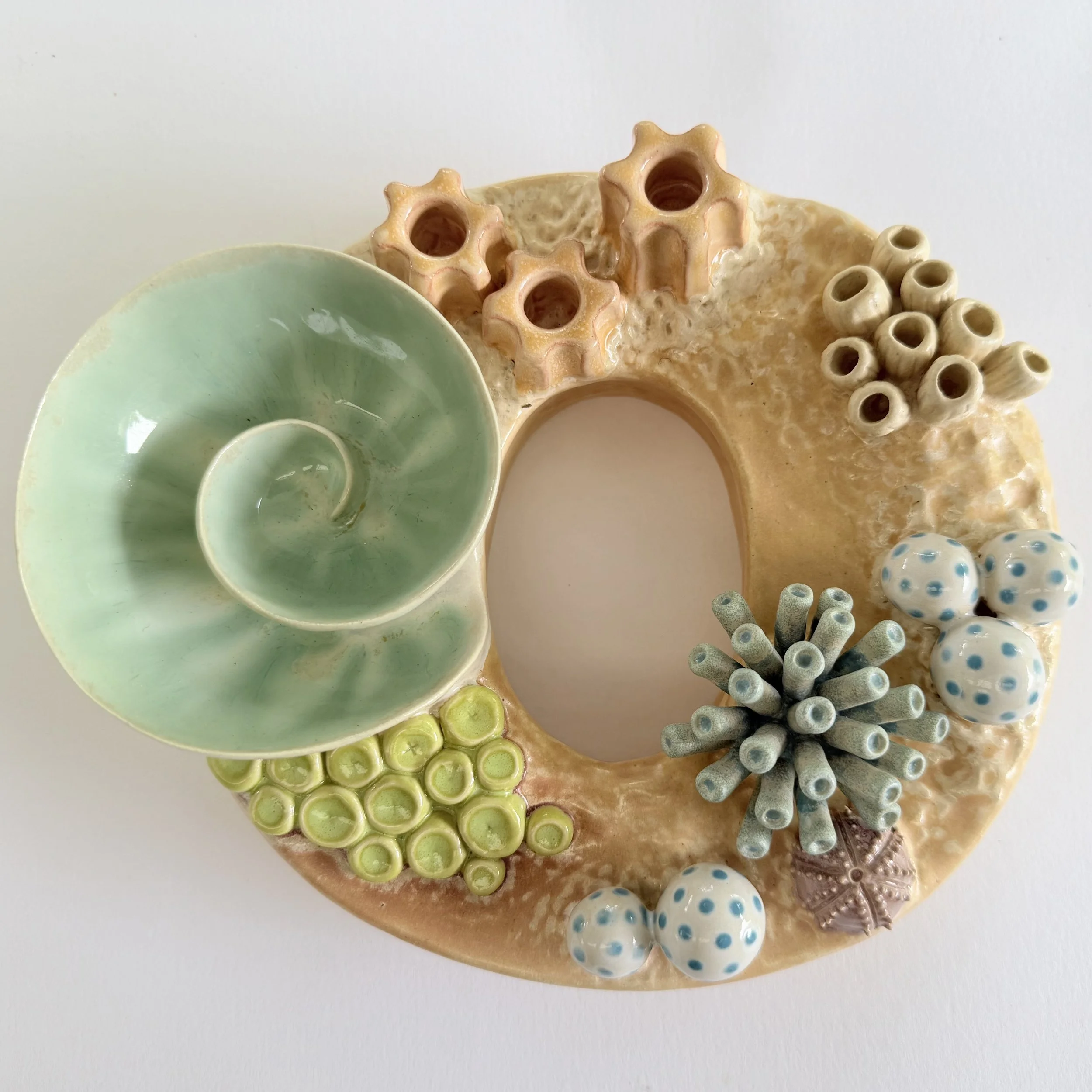
Test letter O
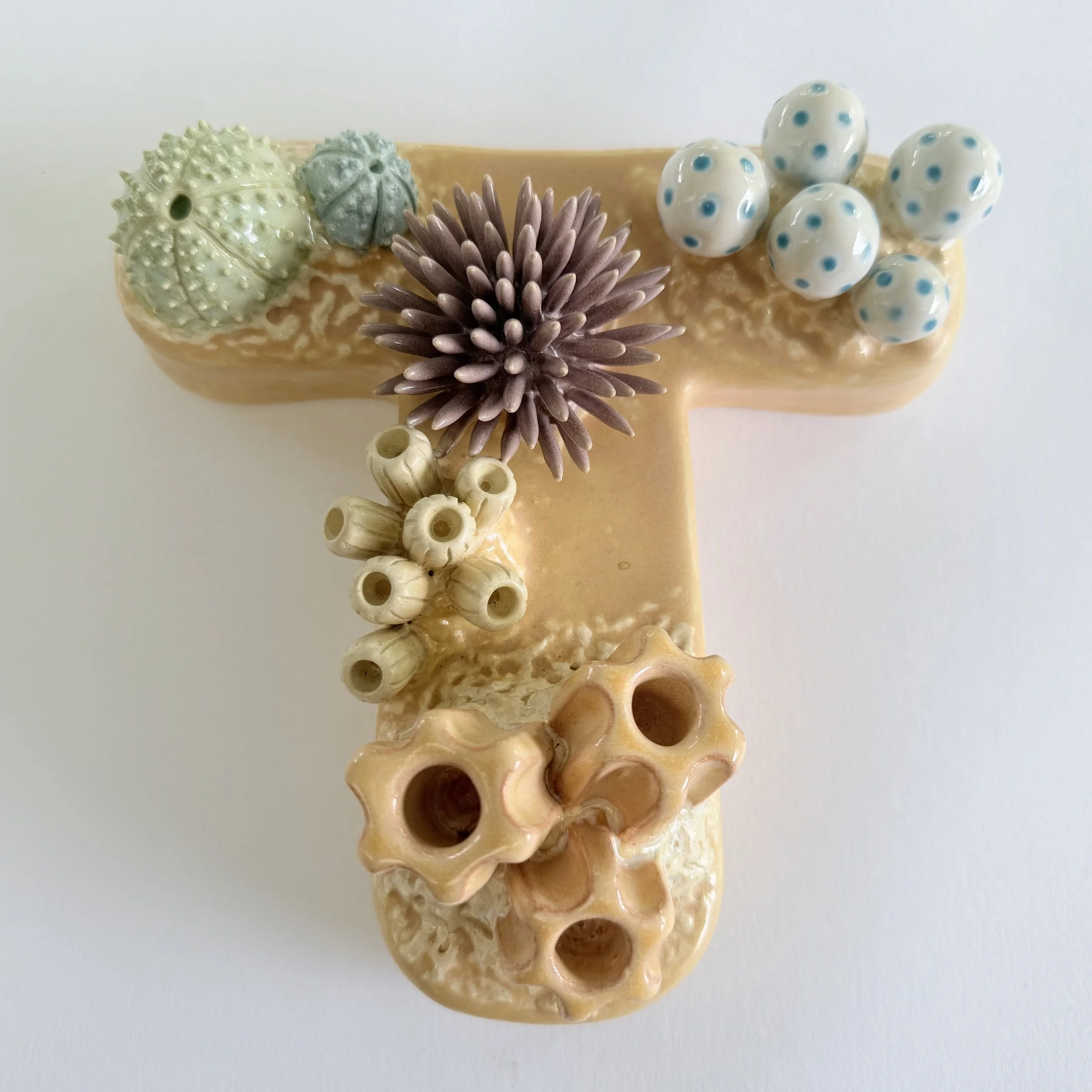
Once I was happy with some of the coral prototypes and how sturdy they were, I created a test letter O.
Restrains & Implications
My mental health
As I tend to bite off more than I can chew –comfortably– I need to make sure I don’t give myself too much to do. I don’t want to drive myself crazy making it.
Have a contingency plan – make ‘TOUCH’ only and/or leave complex coral to end if there’s time.
Design constraints
Break-ability of tentacles & the time it takes to create them. Need to simplify design and make it sturdier.
This was my first idea and I’ve just run with it.
Drying rate of the clay
Timing of using tools to make clay - not to wet, not too dry.
Keeping pieces wet with butchers paper and maybe a damp box.
Timeline order
Order of making is quite important - do I make all the letters first then start decorating with the reef?
Or Do I go letter by letter, only working on one letter at a time? How do I keep it consistent across them all?
Time constraints
I have a finite amount of time so I can’t get too carried away with detail and over run. Be realistic with my time frame. Don’t bite off more than I can chew without giving myself a mental breakdown.
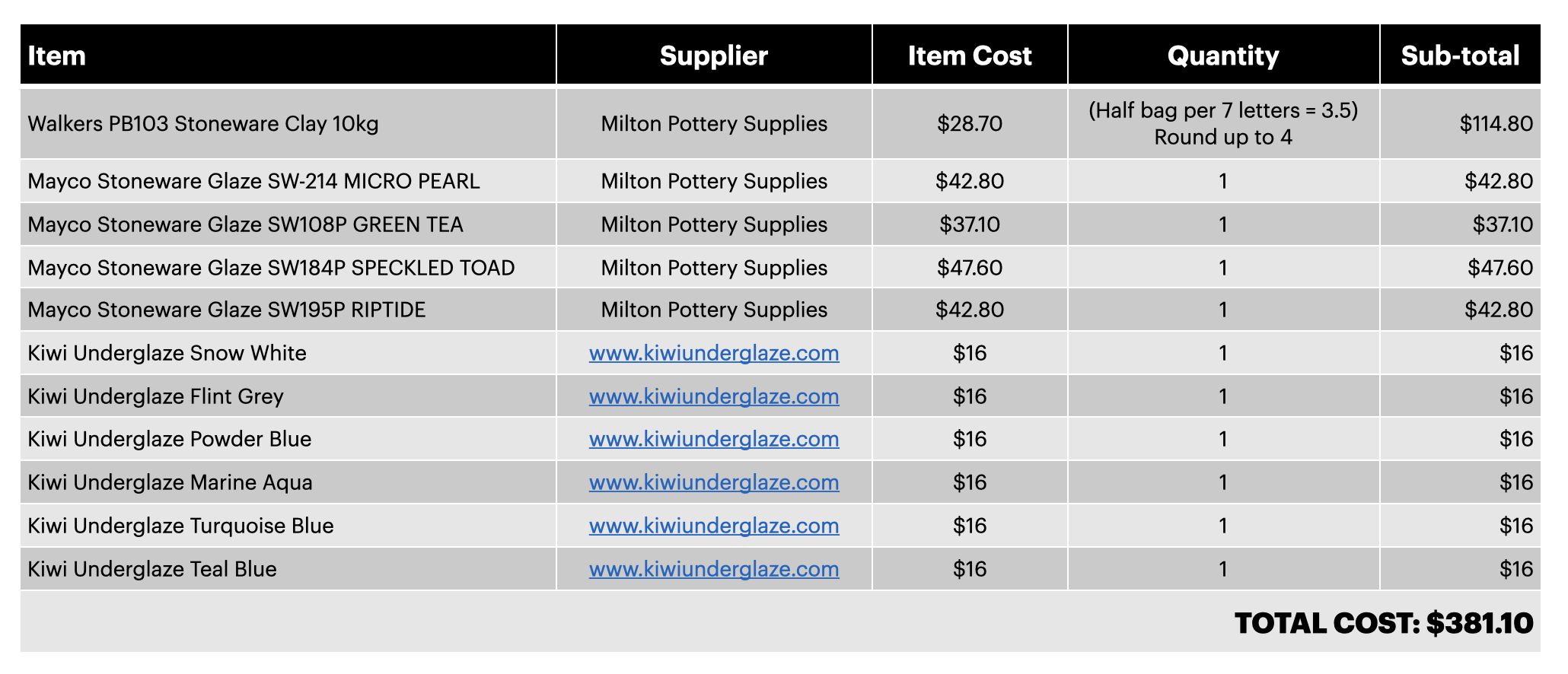
Budget
Documentation
What is my Purpose?
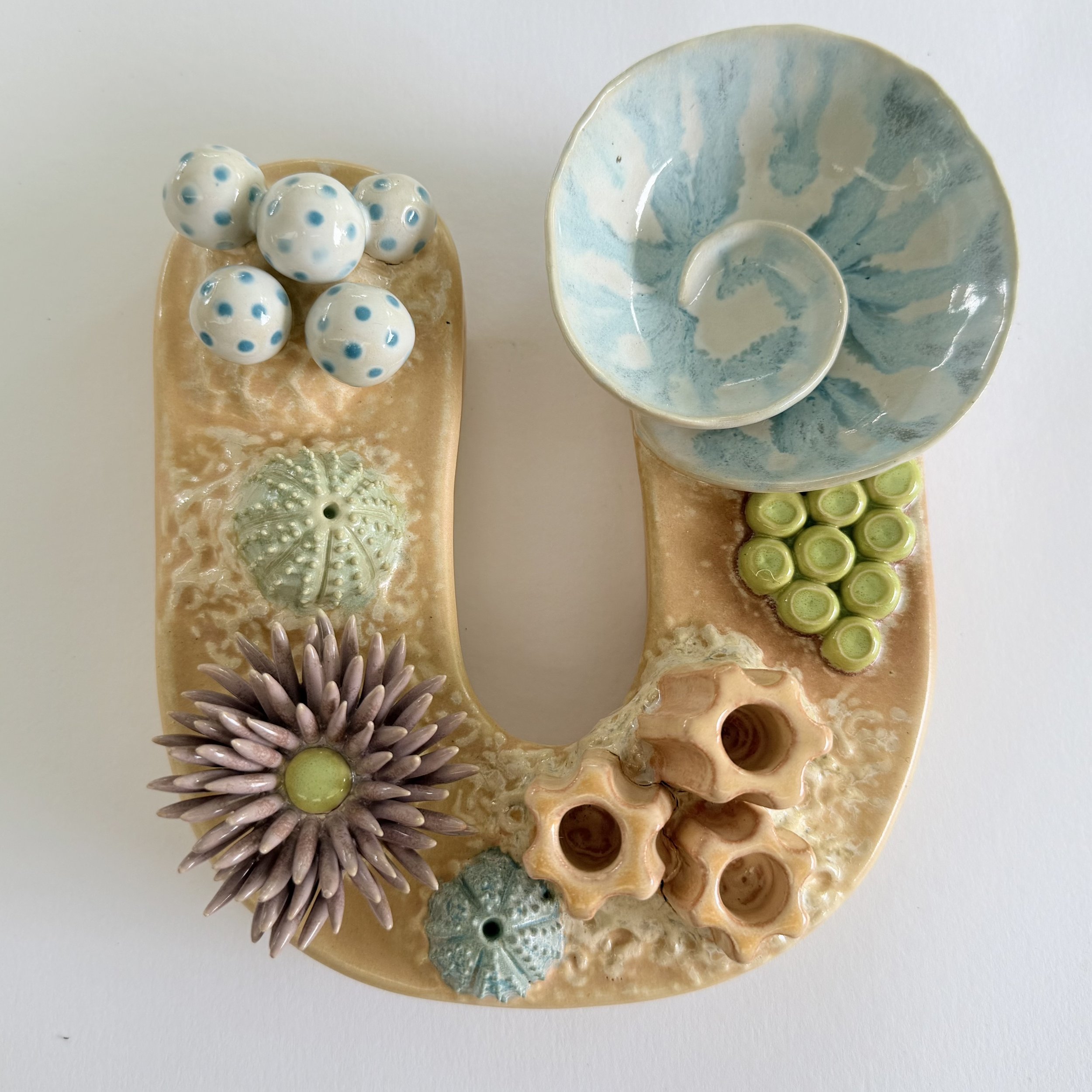
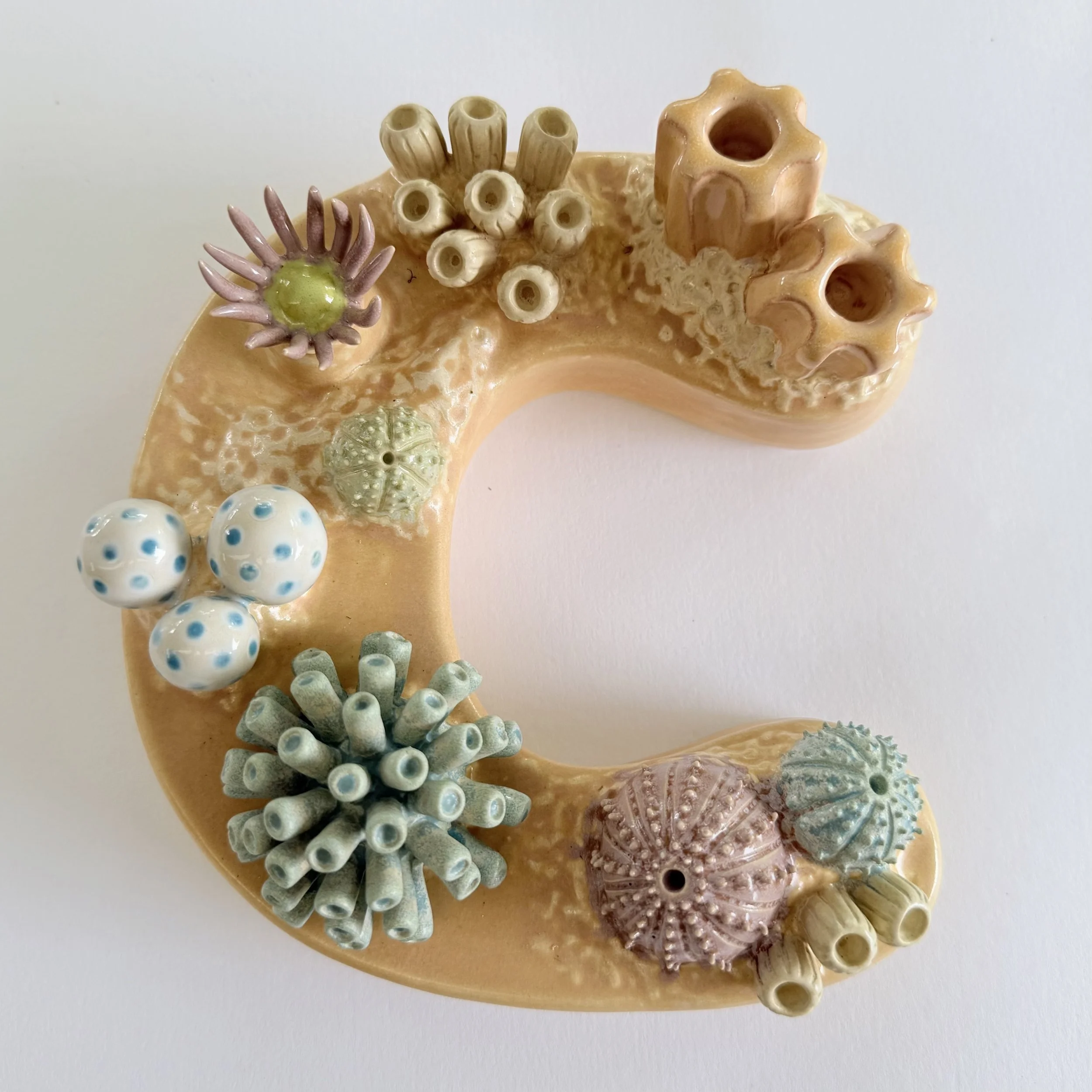
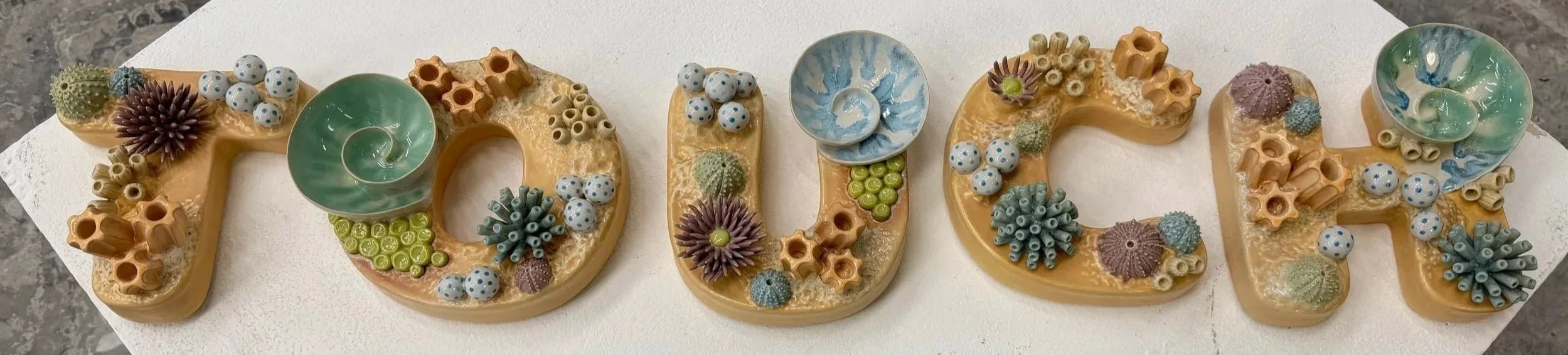
I aim to create a tactile reef designed to support sensory regulation in neurodivergent individuals.
How will I document my Studio Project?
Take WIP Videos
Photos at key stages
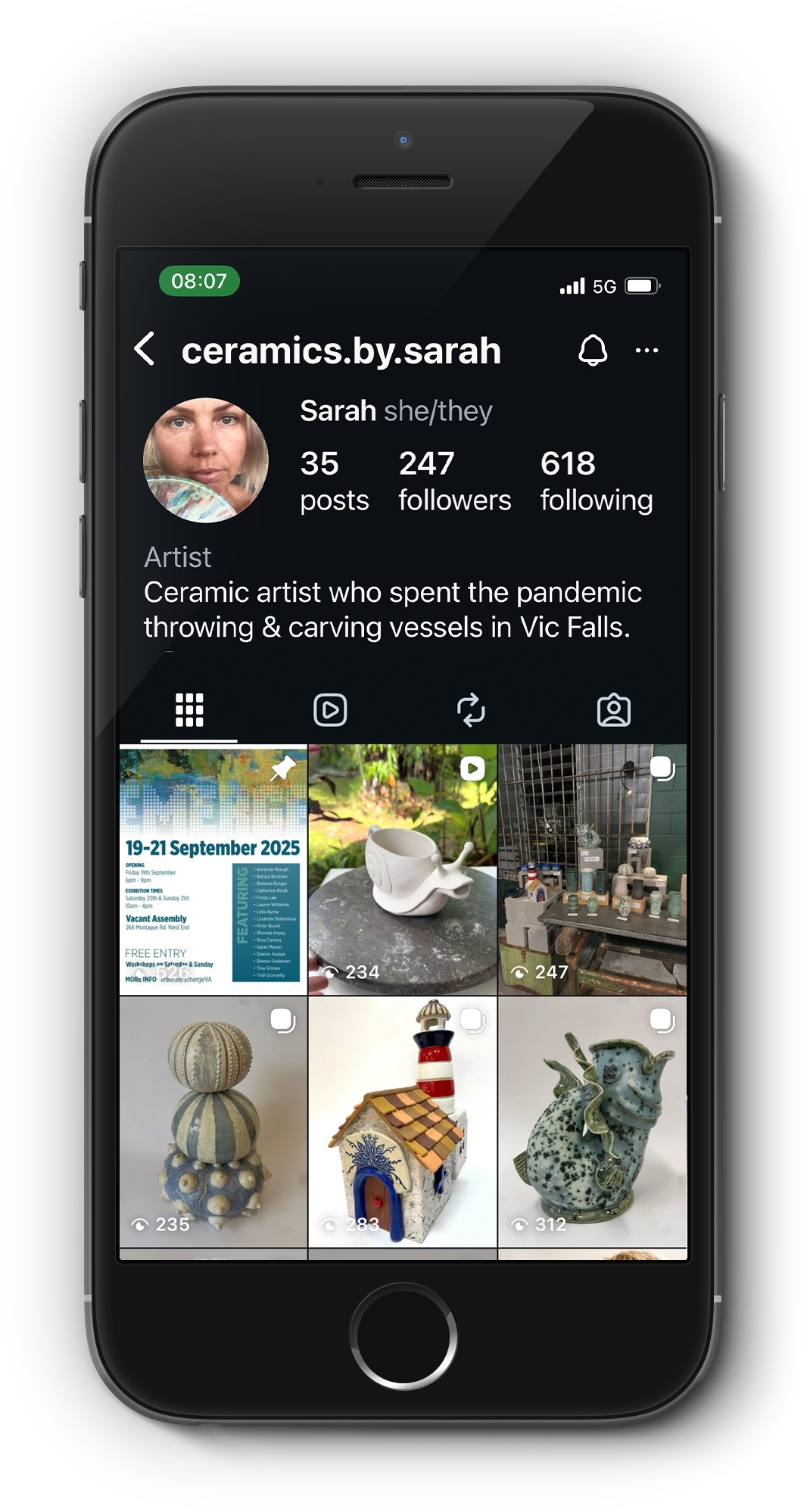
Post to Instagram @ceramics.by.sarah
Create an article on my folio website www.designbysarah.org
Who is my Audience?
Everyone
Especially neurodivergent people and ocean lovers like myself
Anyone who needs to take some time out and relax
Main points discovered
There are actually 8 senses (not 5) and we each have a sensory profile — an ability to sense, process, and respond to our external or internal world.
When our sensory strengths and weaknesses don’t align well with a situation, we may process information more slowly and respond less effectively. In some environments, this can lead to distress or withdrawal due to hyper or hypo responsive sensory system.
Engaging with art — whether by creating it or simply viewing it — can support mental and emotional well-being. Art bridges communication that can otherwise be a struggle.
Art-making serves as a communication and emotional regulation tool for neurodivergent students, fostering confidence and self-expression.
Observing art can lower stress and anxiety levels and enhance overall mood.
Analysis
How these opinions & views influenced my work
Neurodivergent people face many challenges, especially with sensory processing – I've come to see how important tactile art can be in supporting them.
Textures and repeating patterns are appealing, so I will incorporate them into my reef.
Each of us has a unique way of sensing, understanding, and reacting to the world around and within us.
Benefit from implementing this research into my own ideas
I can tailor my artwork to support sensory regulation by incorporating elements that promote calmness, focus, and emotional grounding.
Through the use of specific colours, textures, patterns, and visual rhythms, I aim to create a piece that can help ease the intensity of sensory overload and reduce the impact of emotional meltdowns.
Whether used in therapeutic settings, personal spaces, or sensory-friendly environments, my art is designed with intention— to provide tactile and visual comfort, contributing to a more soothing atmosphere.
Work In Progress article – COMING SOON!
Thanks for reading about the thinking behind my touch piece! A more detailed article explaining the process behind making TOUCH and the next steps I have planned for it will be published at a later date.
I’m pretty excited about it! Hopefullly it can be an effective tool to support sensory regulation in neurodivergent individuals.
Make sure you sign up for my mailing list if you don’t want to miss out!
TOUCH: THE MAKING